On Wednesday July 1 we had time after our golden monkey trek to do some side trips which were very close to where we stayed. One stop was at The Champion Cafe https://bestrwandatours.com/
The Coffee Legend: The legend goes something like this: In the 9th century, a goat herder from the region of Kaffa in Ethiopia named Kaldi noticed that his goats were eating bright red berries from a certain bush. After eating the berries the goats seemed to have more energy. Kaldi was curious about this and so he ate a few of the red berries. He experienced the same kind of energy. He brought the berries to a nearby monastery. The monks were skeptical and supposedly threw the berries into the fire, believing they might be dangerous. As the beans roasted, they released a rich, enticing aroma. The monks raked the roasted beans from the fire, crushed them, and steeped them in hot water to preserve them. The resulting drink helped them stay awake during long hours of evening prayers. Or so they say!
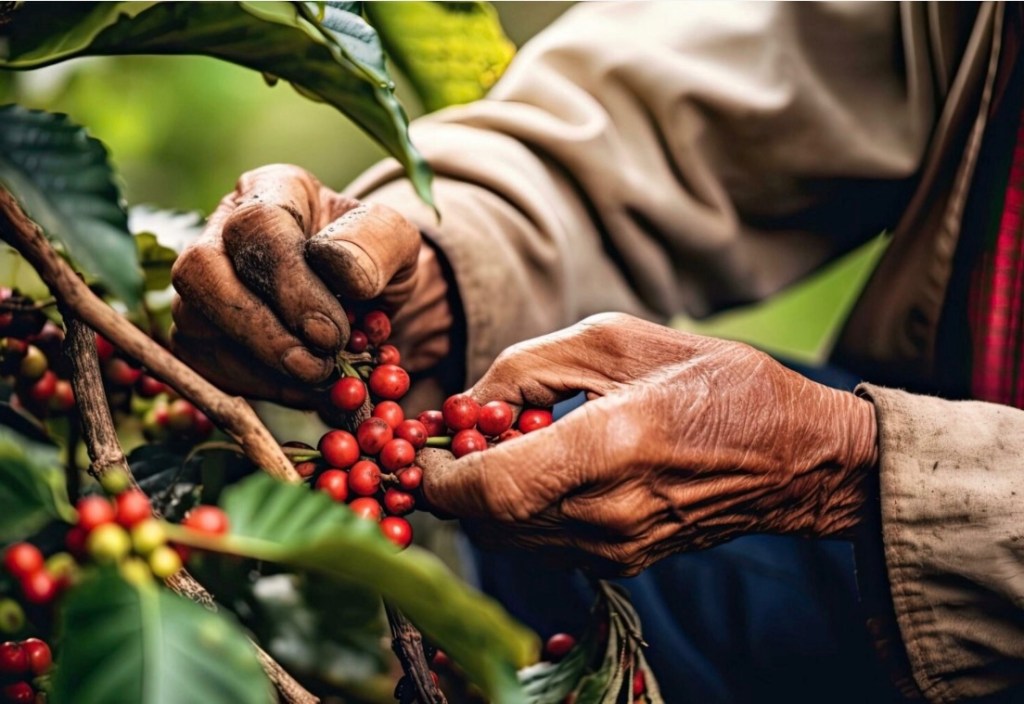
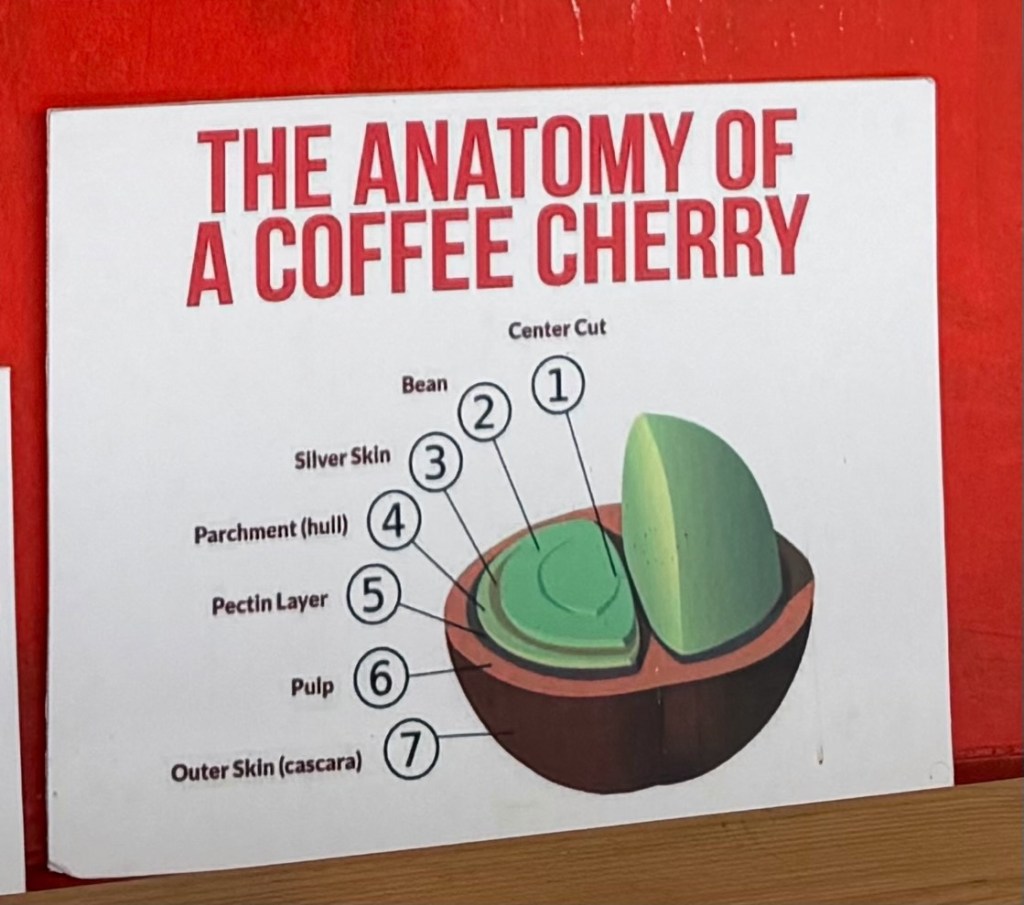
Coffee cherries are the fruit of the coffee plant, biologically classified as a drupe. They start green and ripen into vibrant red, yellow, or purple hues. The cherry consists of an outer skin, a sweet and sticky pulp, and a protective parchment layer, all encasing the two seeds we know as coffee beans.
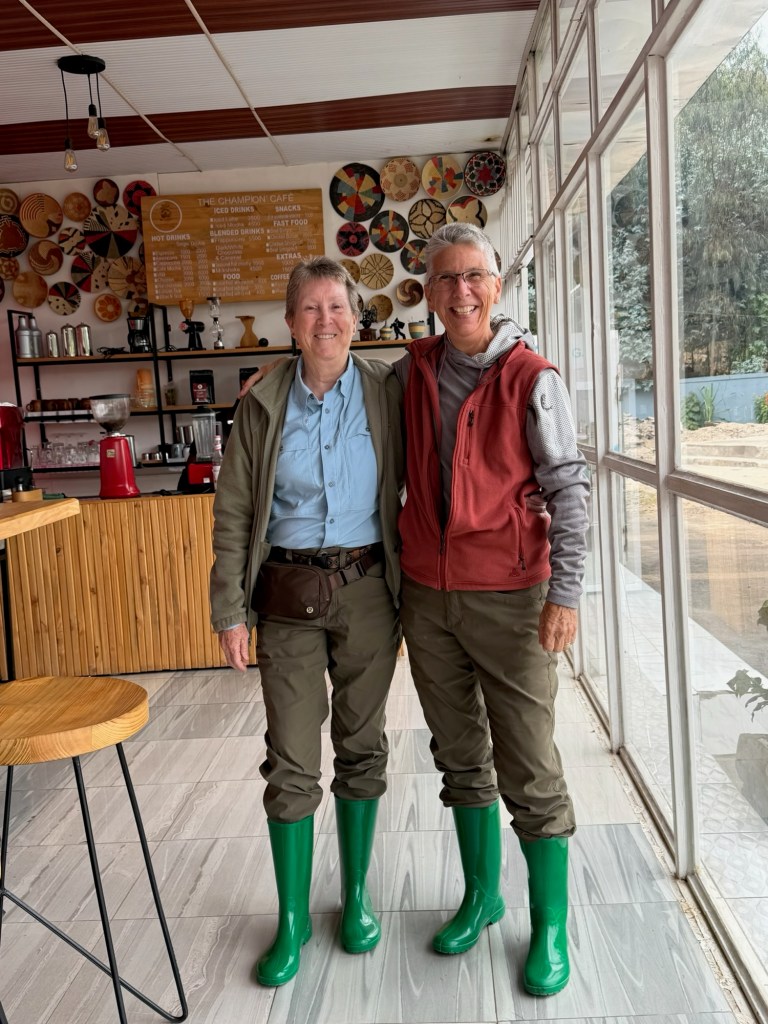
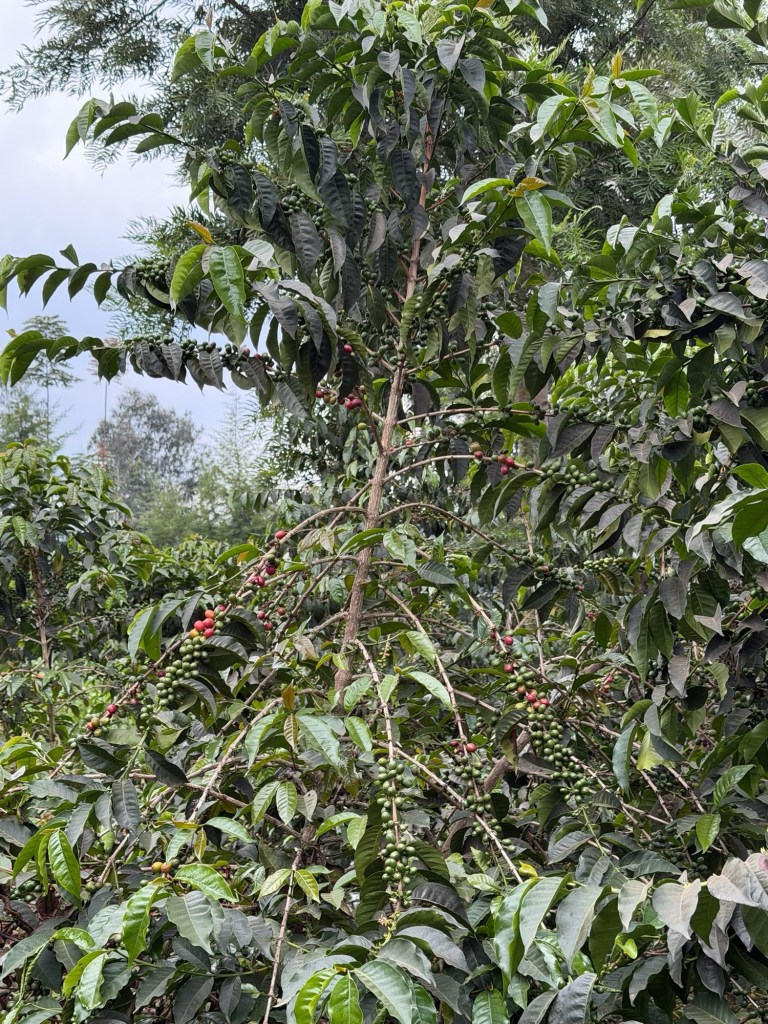
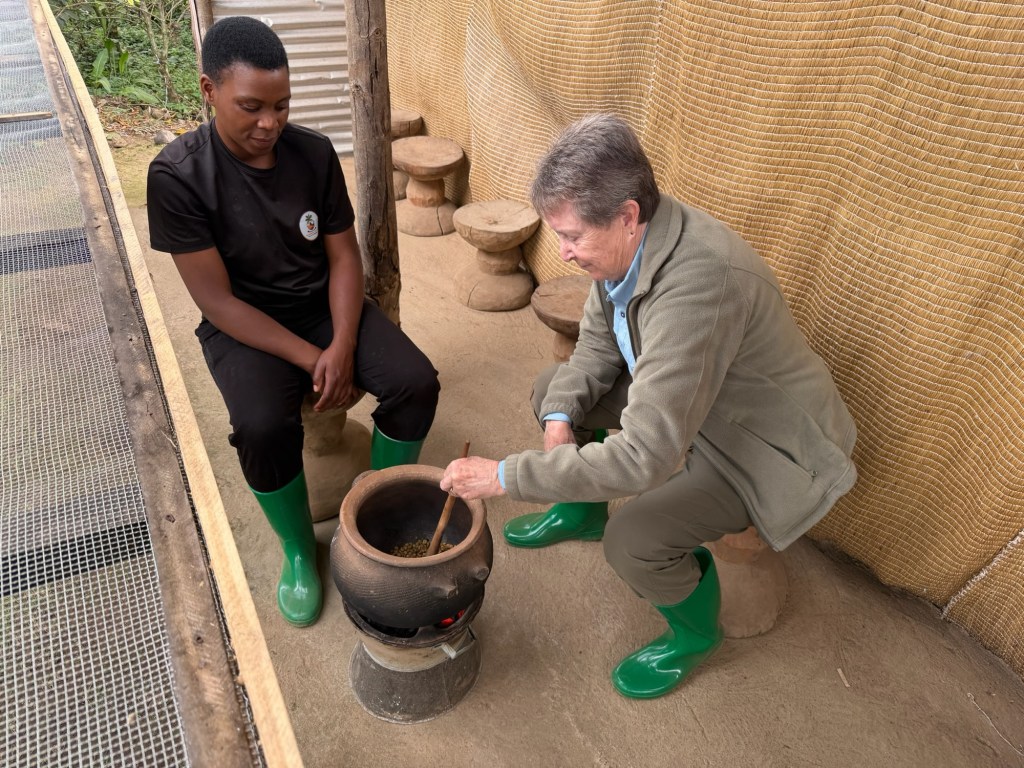
The Experience begins in the field. We hike up to the coffee field and learn about the anatomy of the bean, how they are planted, cared for and harvested. All steps from planting to roasting are all done by hand. The beans are washed and separated, then dried and graded according to quality. We then get to roast and grind the beans while still in the field. The grand finale is a beautiful cup of fresh coffee so smooth that milk or sugar is not needed. 💚☕️

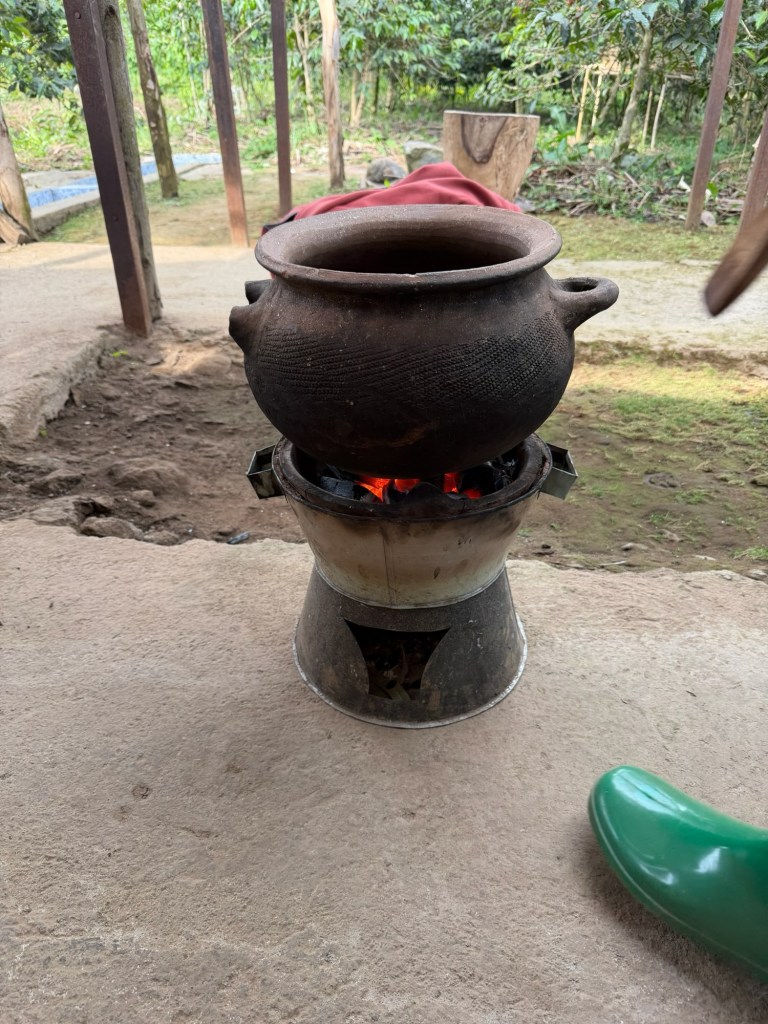
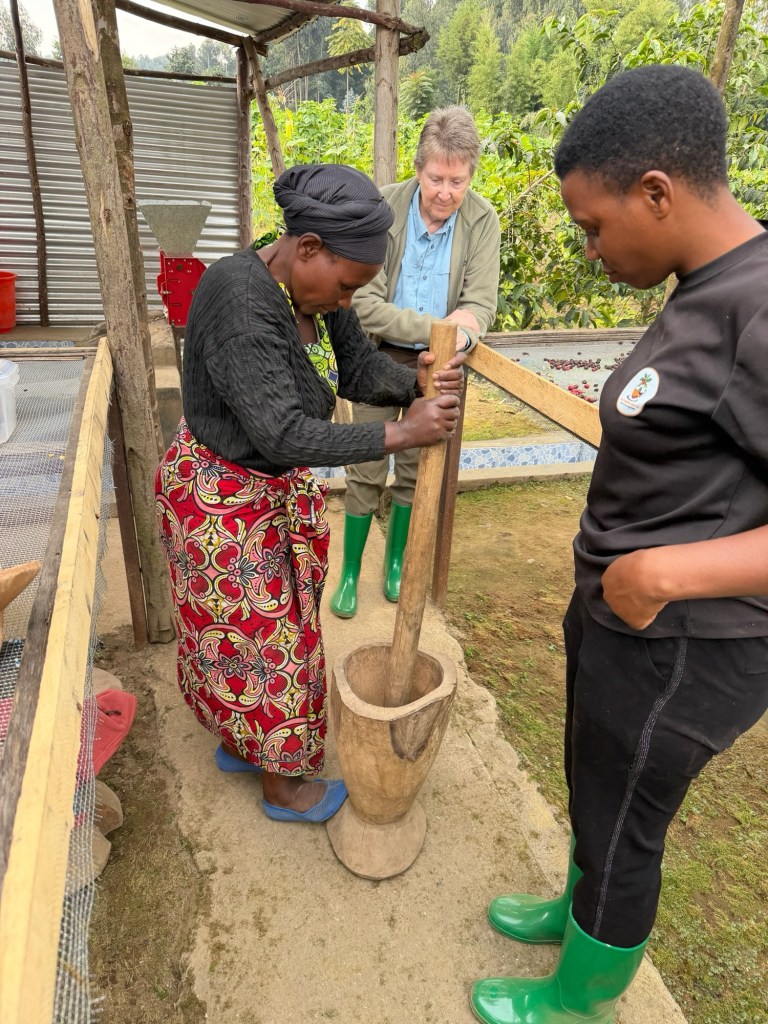
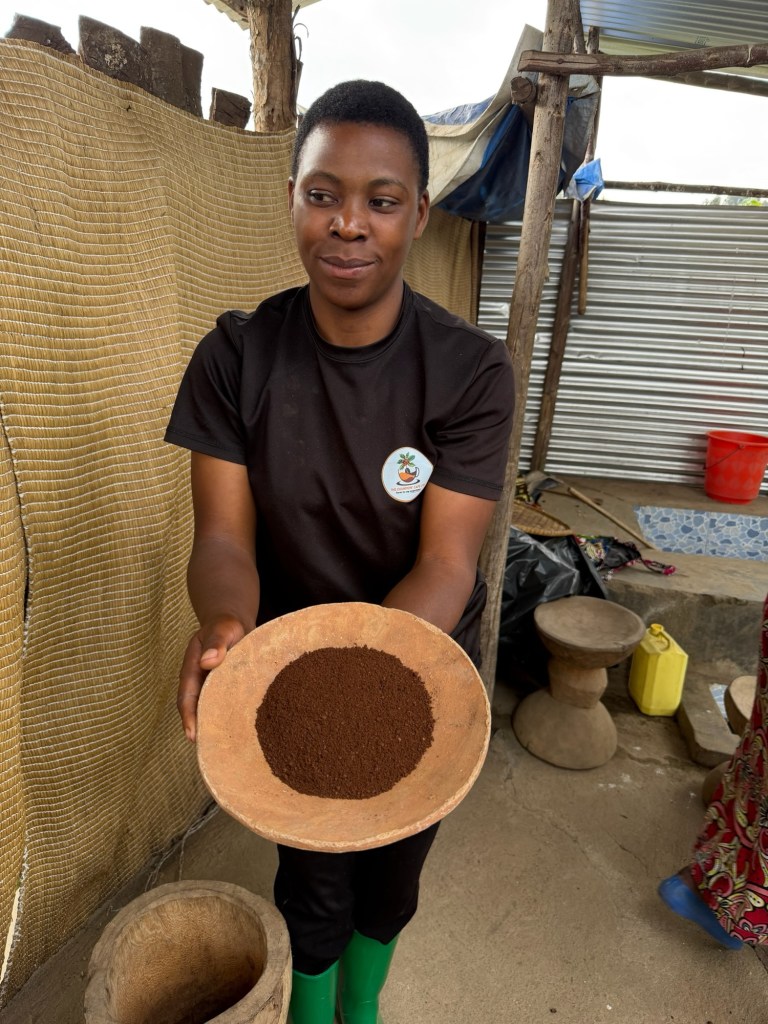
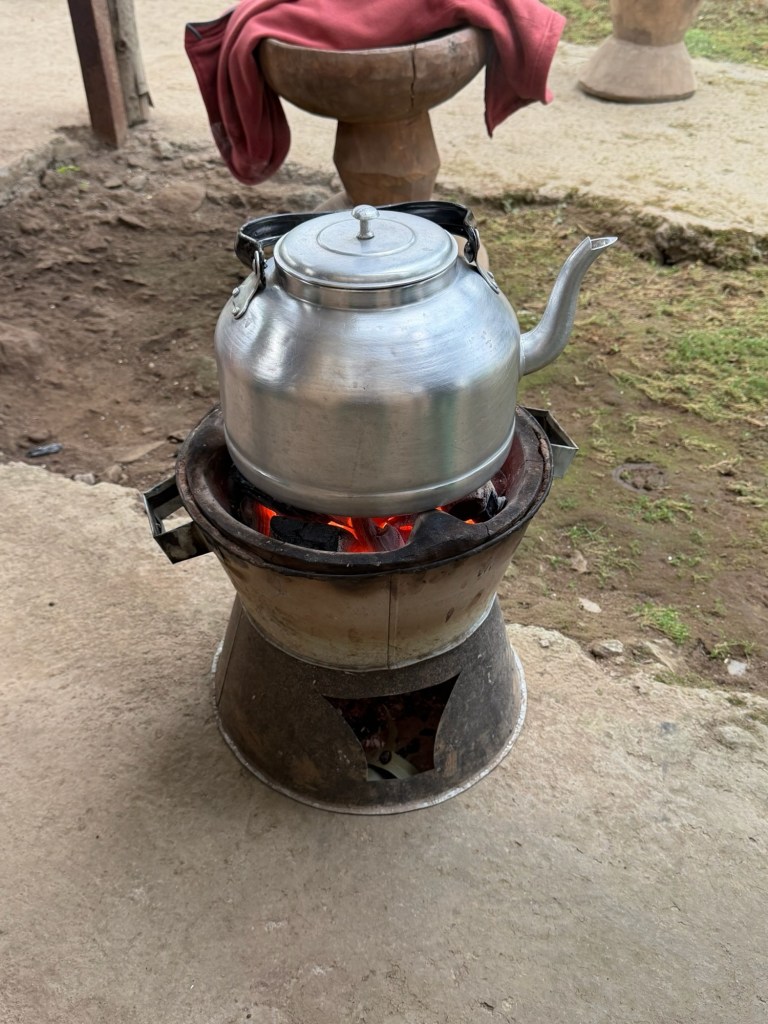
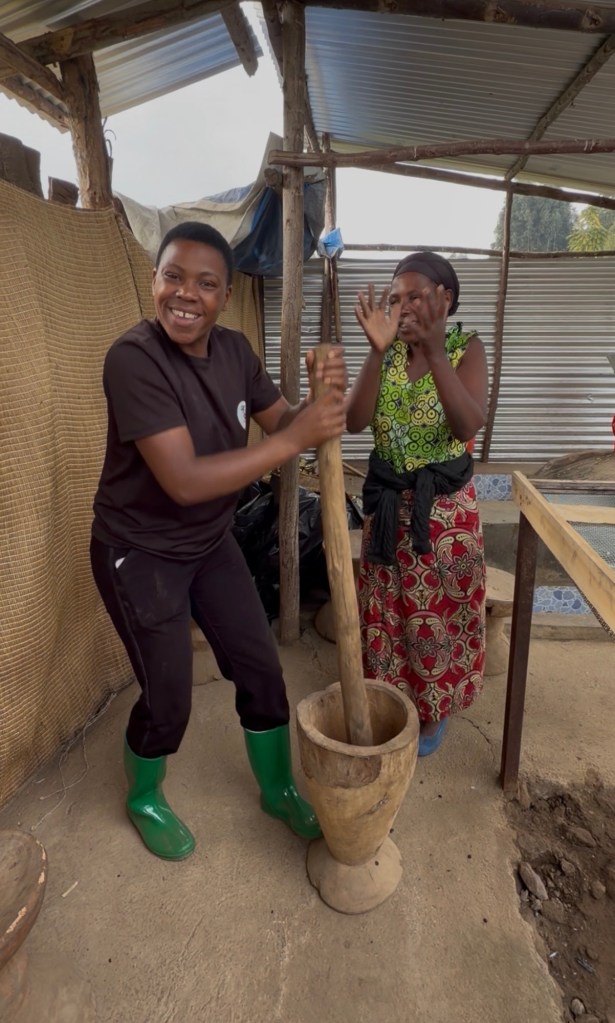
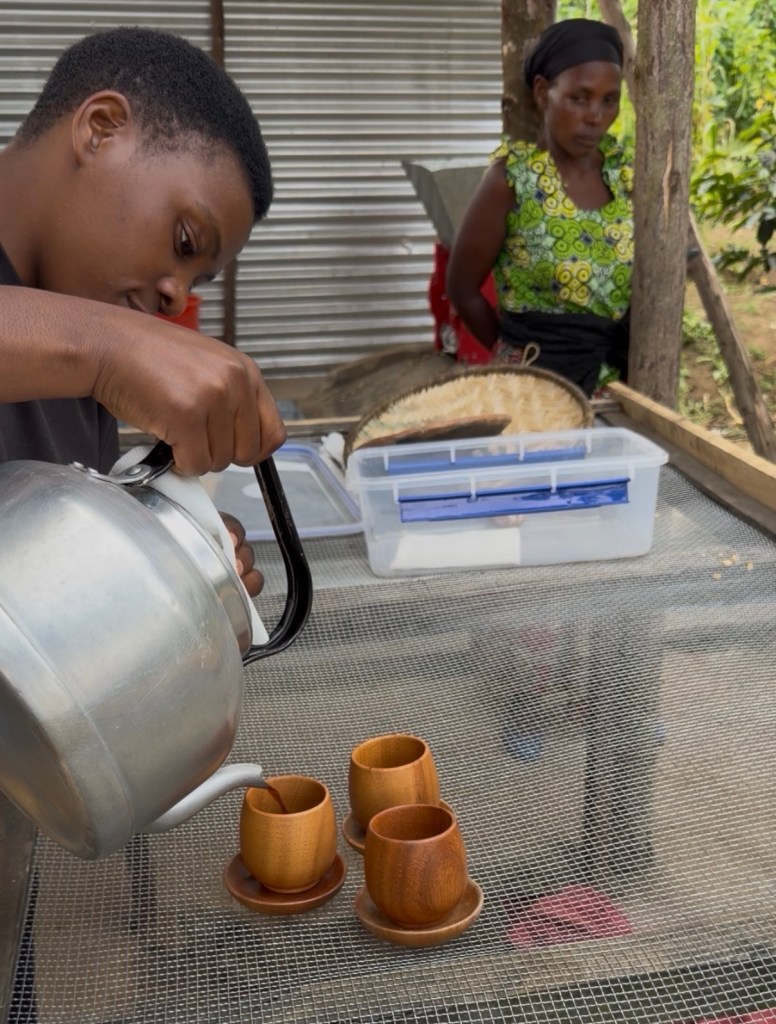
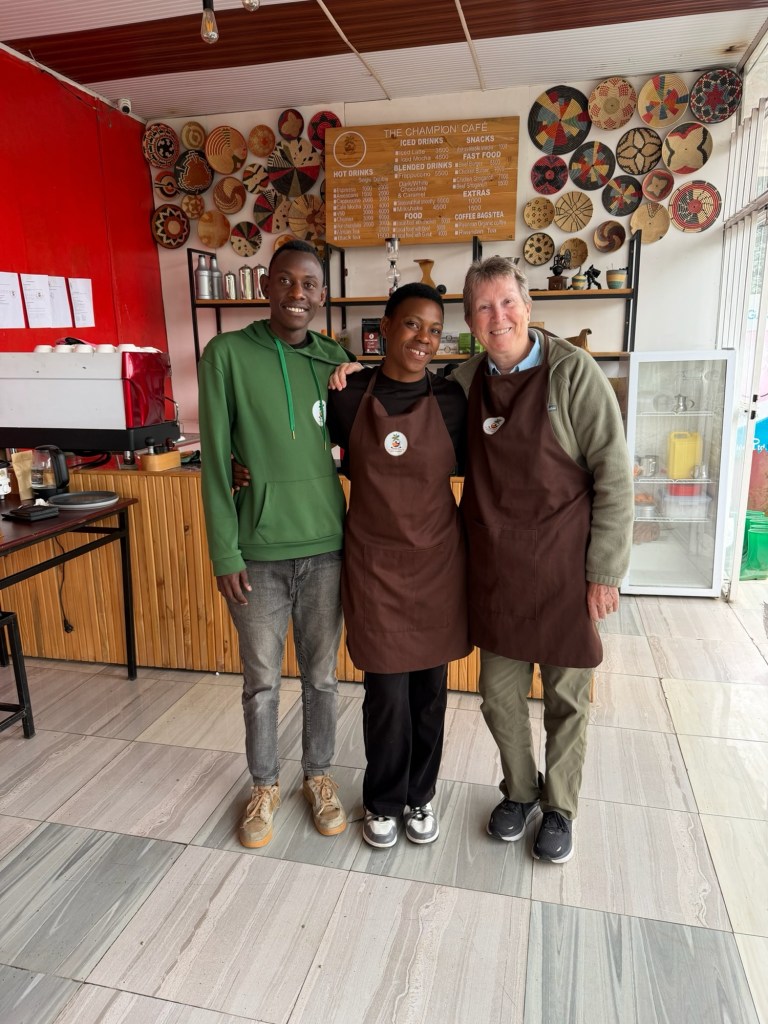
Our experience has not ended. We go back to the coffee shop and have a taste testing where we grade the features of 3 different kinds of coffees. Olive our guide was a great teacher and she said we passed with flying colors!
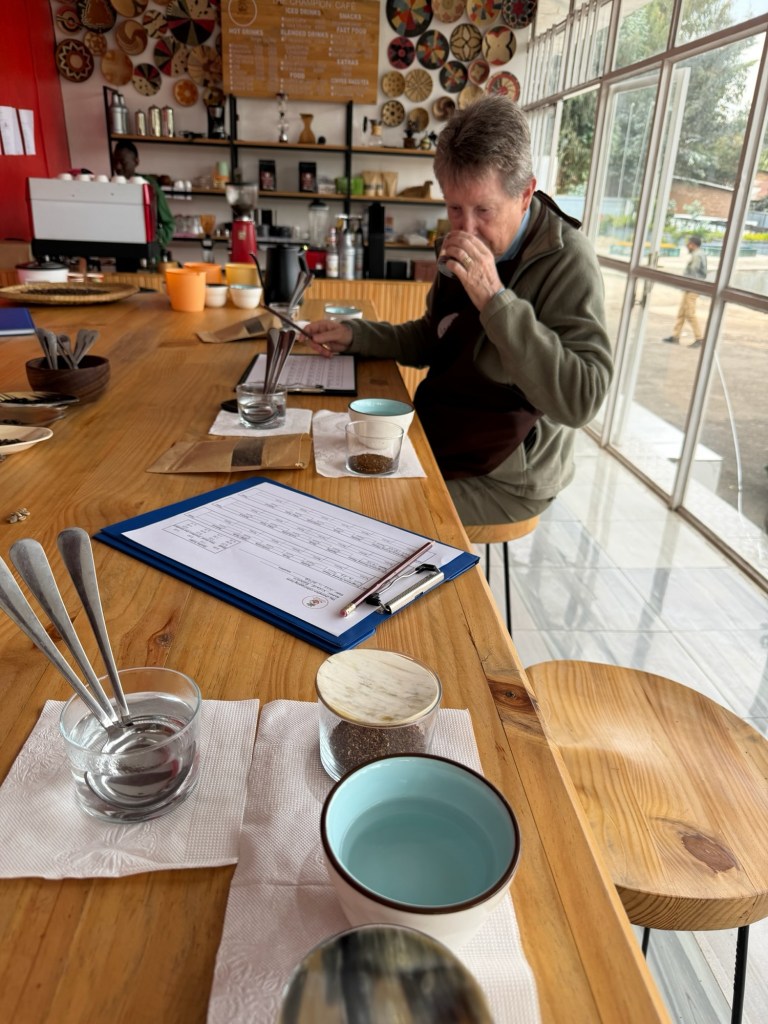
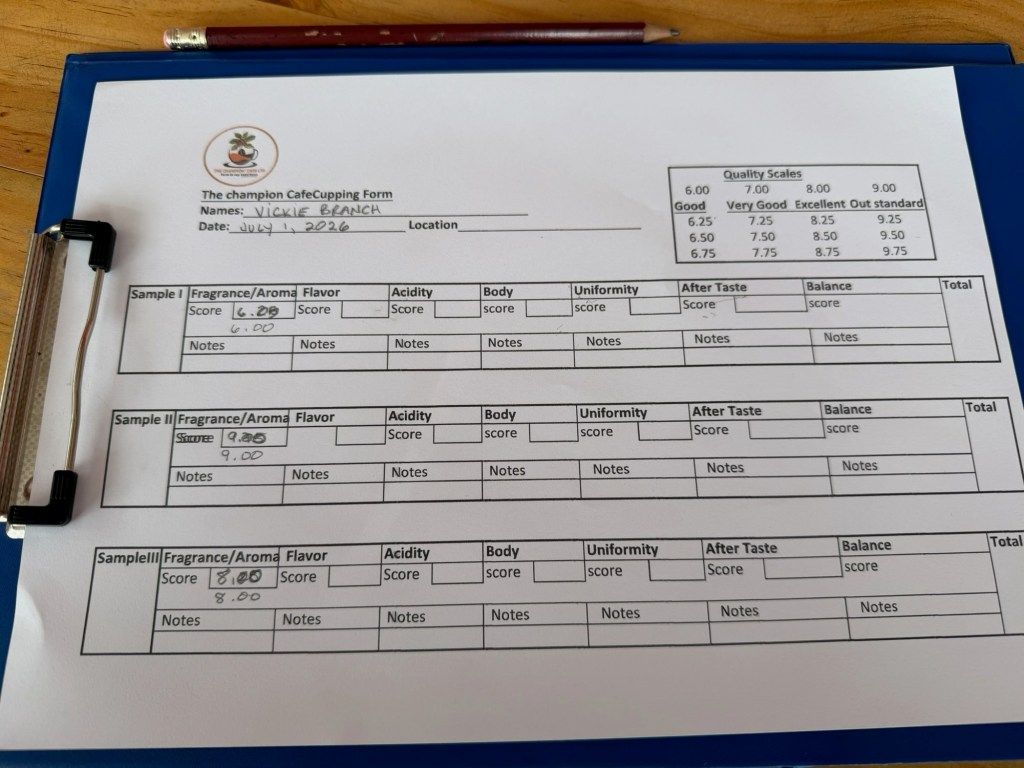

And yes- we did buy a bag to bring home.
Dian Fossey
The Ellen Degeneres Campus
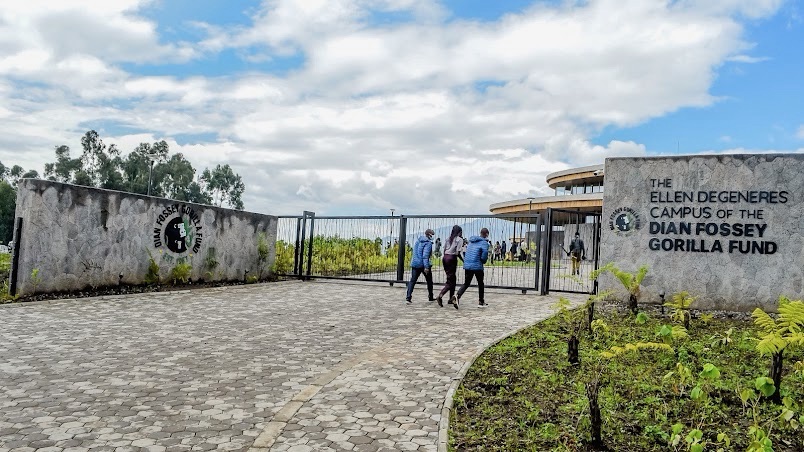
For Ellen’s 60th birthday, her wife Portia de Rossi, gave her a gift to the Dian Fossey Gorilla Fund that built the campus that now houses a tourist information center and the Karisoke Research Center.
We don’t have too many photos of this campus – there is SO much information we figured you could view this virtual tour of the Ellen Degeneres Campus.
https://youtu.be/5XVuqEqe-ZU?si=dDzoJdx8z6Tc87PY
As well as visit the Dian Fosseys Gorilla Fund site: https://gorillafund.org/who-we-are/
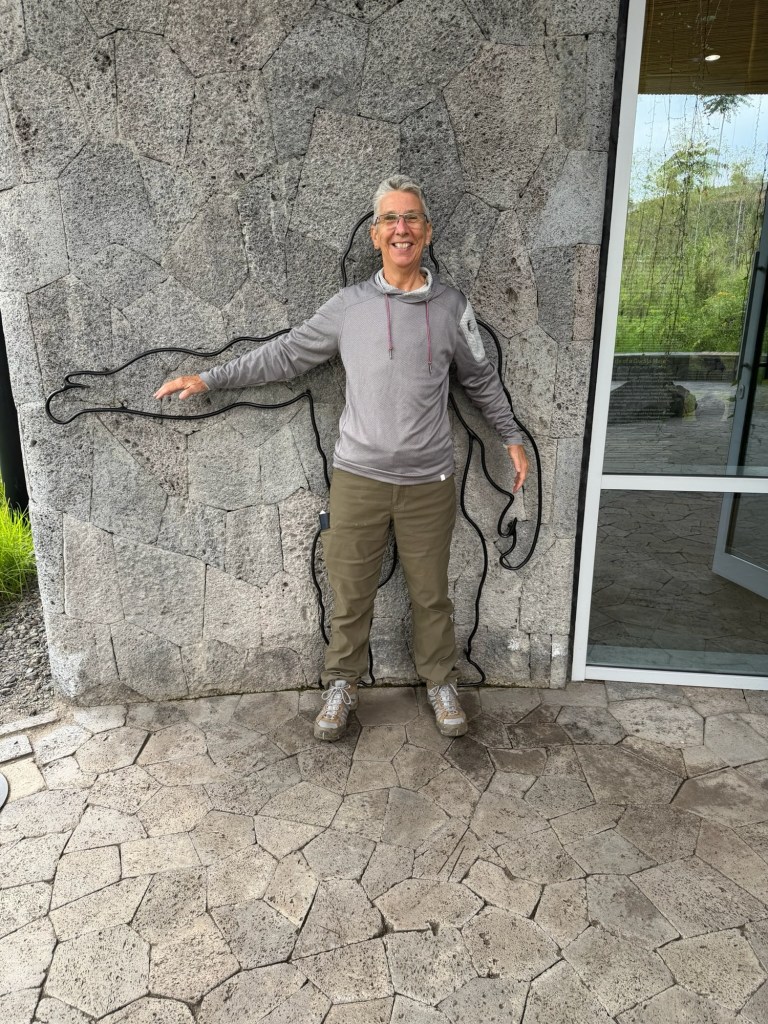
The center is beautiful and even houses Dian’s original cabin that was relocated by a donation from Sigourney Weaver, who portrayed Fossey in the movie “Gorillas in the Mist”
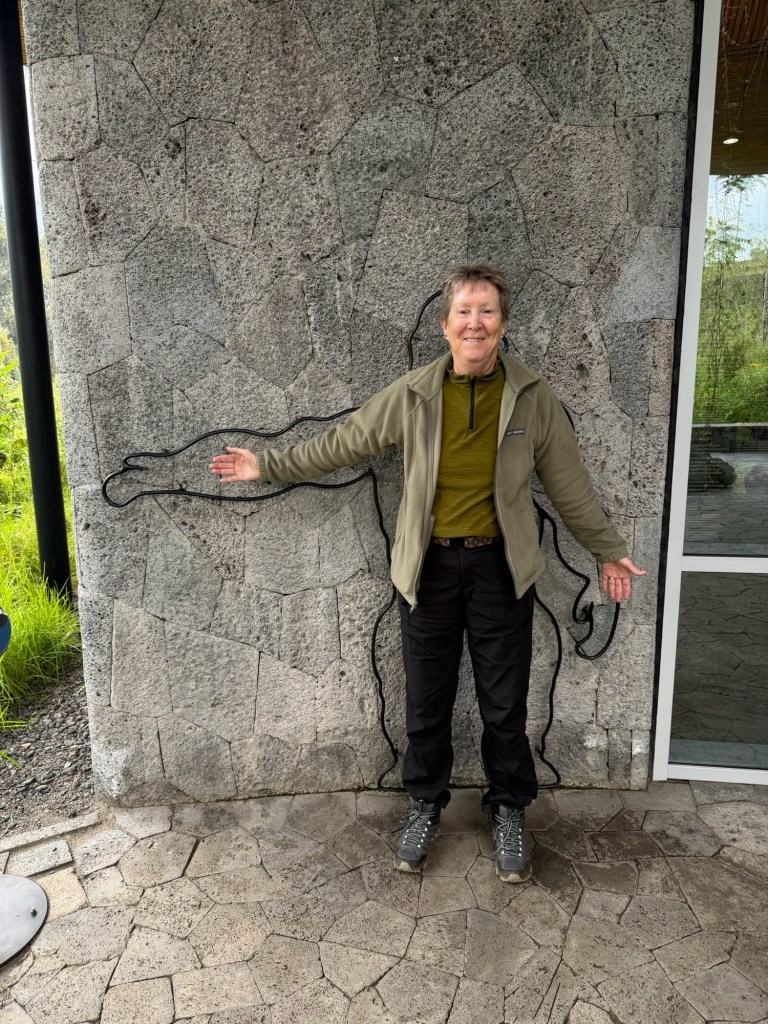
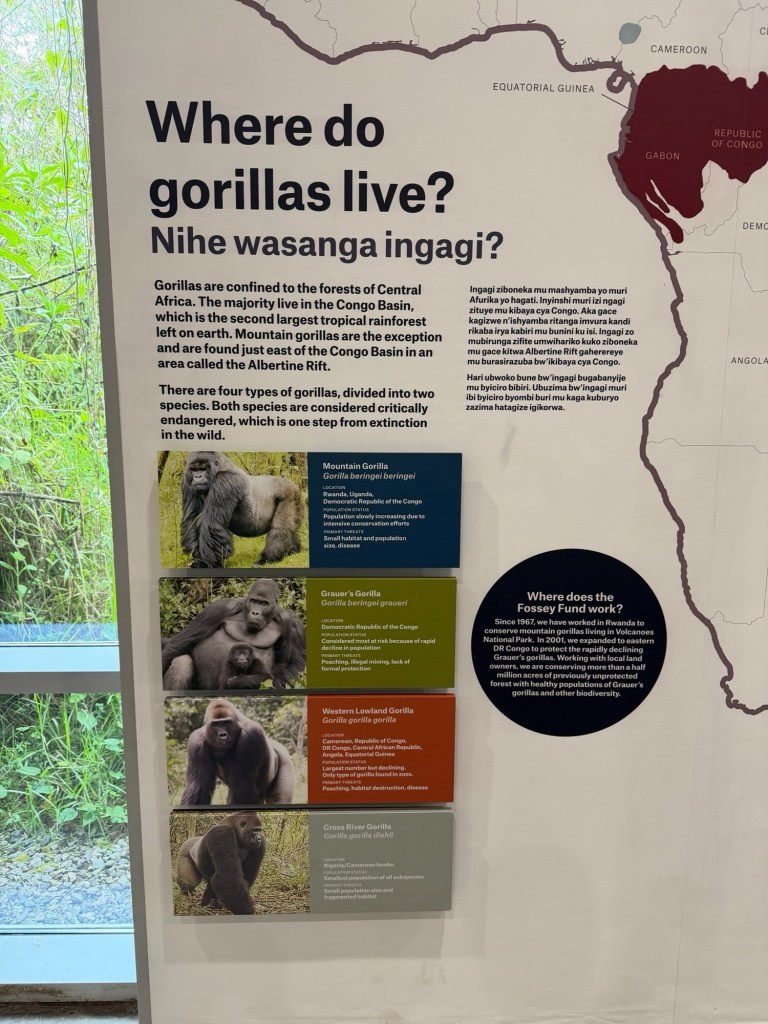

An important distinction is that this is the only place in the world where Mountain Gorillas live within the Volcanoes National Park that share borders with Rwanda, Uganda and the Democratic Republic of Congo. Part of the devastation of these gorillas is poachers would capture babies to sell to zoos. But in order to capture the baby they would have to kill the entire family. And mountain gorillas do not live long if taken out of their natural habitat.
The good news now is that when Fossey started her research in 1967 the population of gorillas was 250-300. Today the count is now over 1000 because of intensive conservation efforts that include anti-poaching patrols, veterinary care, habitat protection, and carefully managed gorilla tourism. Another great organization that we learned about is Gorilla Doctors: https://gorilladoctors.org/
The Gorilla Doctors organization is the only veterinary team dedicated to providing direct medical care to wild eastern gorillas. Founded in 1986 after Fossey realized that injuries caused by humans were devastating the gorilla population. They work with the gorilla in the forest and only treat human caused injuries or illness. The doctors allow natural illnesses and aging to occur without interference so as not to alter the natural ecology of the species.
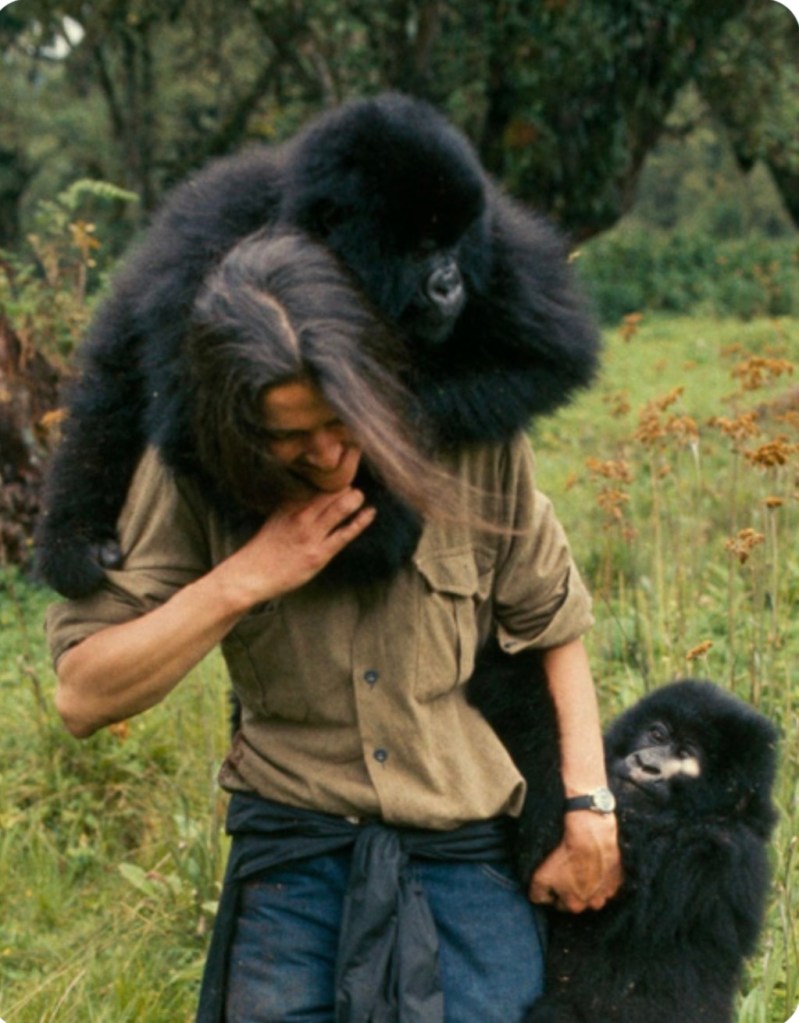
The following information is taken from https://gorillas.org/celebrating-the-legacy-of-dian-fossey/
Below is a timeline highlighting key moments from the life and work of Dr Dian Fossey, whose research and conservation efforts continue to influence how gorillas are protected today.
1963 - Dian Fossey first encountered mountain gorillas in Africa. The sighting made her resolve to return to Africa to study the gorillas in more depth one day.
1966 – Fossey went to observe mountain gorillas in the Democratic Republic of Congo.
1967 – Dian set up the Karisoke Research Centre in the Volcanoes National Park, Rwanda.
1970 – Fossey appeared on the cover of National Geographic Magazine, significantly raising public awareness of her work and the plight of mountain gorillas.
1974 – Fossey earned her Ph.D. in zoology from the University of Cambridge after completing her dissertation, The Behaviour of the Mountain Gorilla.
1976 – Ian Redmond OBE – Chairman of the Board for The Gorilla Organization – became a research assistant to Dian Fossey at the Karisoke Research Centre until the early 80s.
1978 – Fossey established The Digit Fund—later called the Dian Fossey Gorilla Fund—named after her beloved silverback, to finance anti-poaching patrols and active conservation.
In the same year, the first commercial gorilla treks began in Volcanoes National Park—$20 permits helped reinvest in habitat protection.
1979 – ‘Life on Earth’ featuring mountain gorillas with Sir David Attenborough, screened on British television. The interaction, made possible by Fossey’s work, was a catalyst for changing public perception of gorillas from monstrous creatures to gentle, intelligent beings.
1985 – Dian Fossey was murdered in her cabin at the Karisoke Research Centre.
1990s – Mountain gorilla numbers dipped as low as ~250, triggering urgent conservation action.
1993 – Uganda opened Bwindi Impenetrable National Park to tourism, combining permits to see the Mubare family group with conservation funding.
1996 – Ian Redmond founded Ape Alliance to encourage conservation organisations to work together.
2002 – The Dian Fossey Gorilla Fund in the UK changed its name to The Gorilla Organization.
2018 – Mountain gorillas were reclassified from Critically Endangered to Endangered, marking them as the first great ape species ever to show a recovery trend.
Today – Over 1,060 mountain gorillas live across Rwanda, Uganda, and the DRC. Tourism now generates hundreds of millions of pounds annually, funding schools, healthcare, anti-poaching efforts, and local development.
Thanks for reading.
Leslie and Vickie.
🦍🦍🦍


Leave a comment